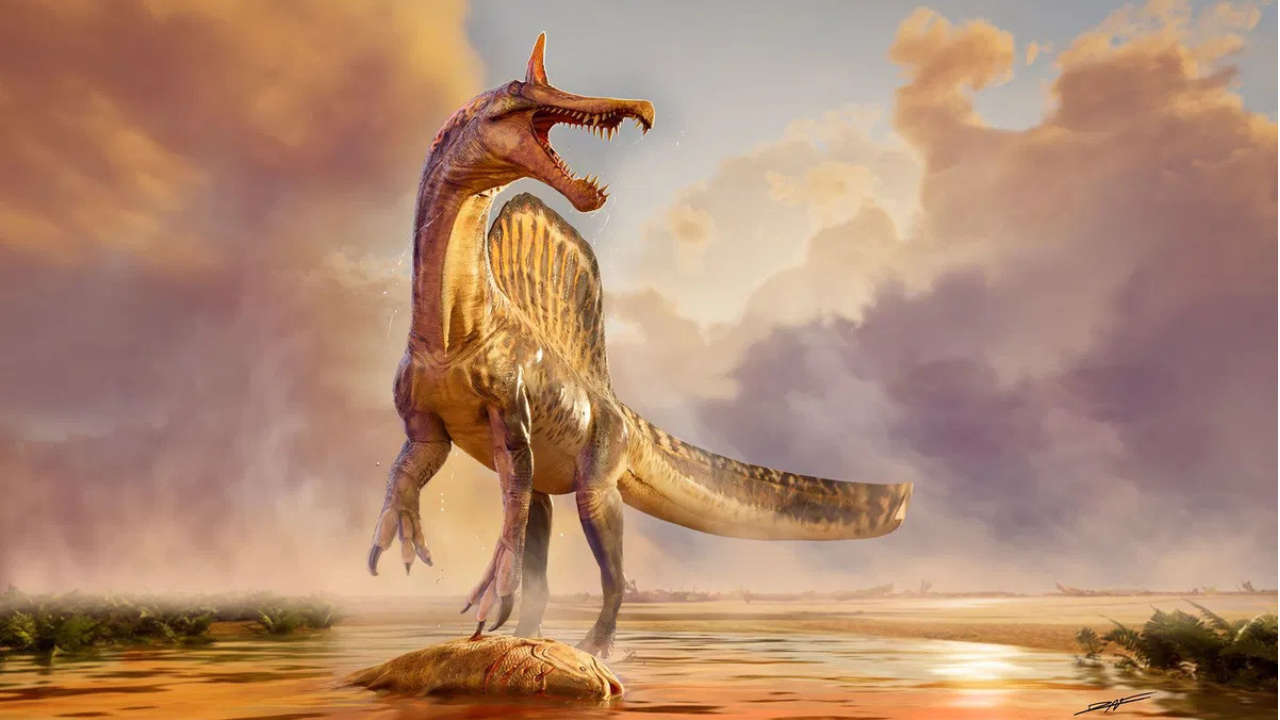
A fossilized skull and jawbones discovered in Niger belonged to a species that lived about 95 million years ago and had a big, bony crest on its head. It is the first species of Spinosaurus discovered in almost a century and is called Spinosaurus mirabilis. The results, which were published in the journal Science on February 19, indicate that the prehistoric animal is closely related to Spinosaurus aegyptiacus, a massive fish-eating dinosaur with a sail over its back that German scientist Ernst Stromer von Reichenbach first described in 1915.
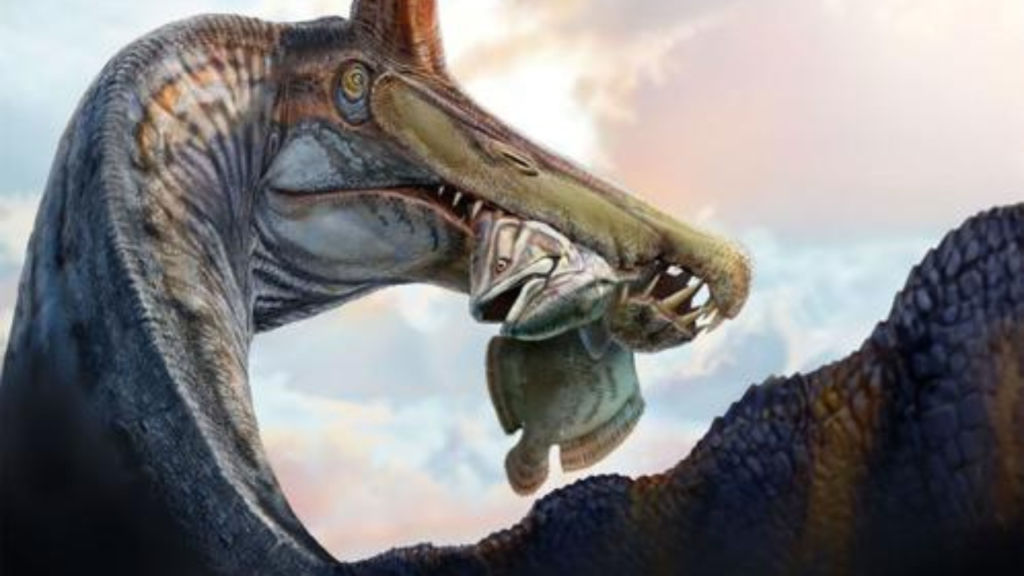
Were they marine pursuit predators animals that dove and swam after prey?
This finding could provide an answer to a long-standing question among scientists regarding Spinosaurus species: Were they more like herons, walking along the shore and deliberately hitting fish in shallow water, or were they marine chase predators that plunged and swam after prey? According to Paul Sereno, the study’s lead author and an organismal biology and anatomy professor at the University of Chicago, the new findings suggest that Spinosaurus was a “hell heron,” a semiaquatic coastal hunter that resembled a wading bird in appearance but was much larger.
The recently discovered fossils suggest that the creature had legs long enough to hunt in shallow water, a neck capable of driving the head down in a stabbing motion, and a long, narrow nose for snaring fish. The dimensions of the fossilized bones’ head, neck, and hind limbs were similar to those of an adult blue heron, indicating that Spinosaurus was suited for stalking and striking over open shorelines and riverbanks.
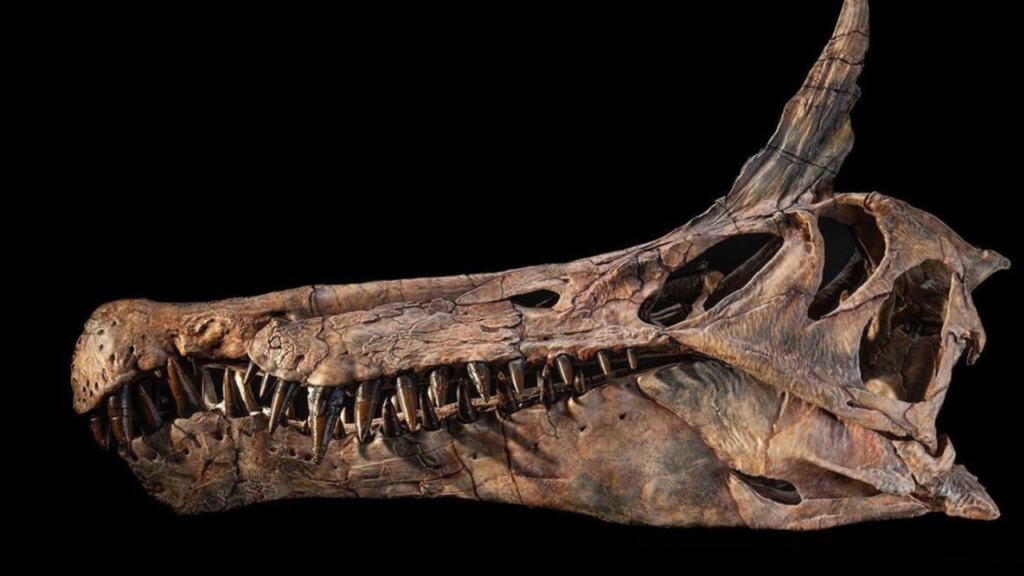
Fossils were found very far inland
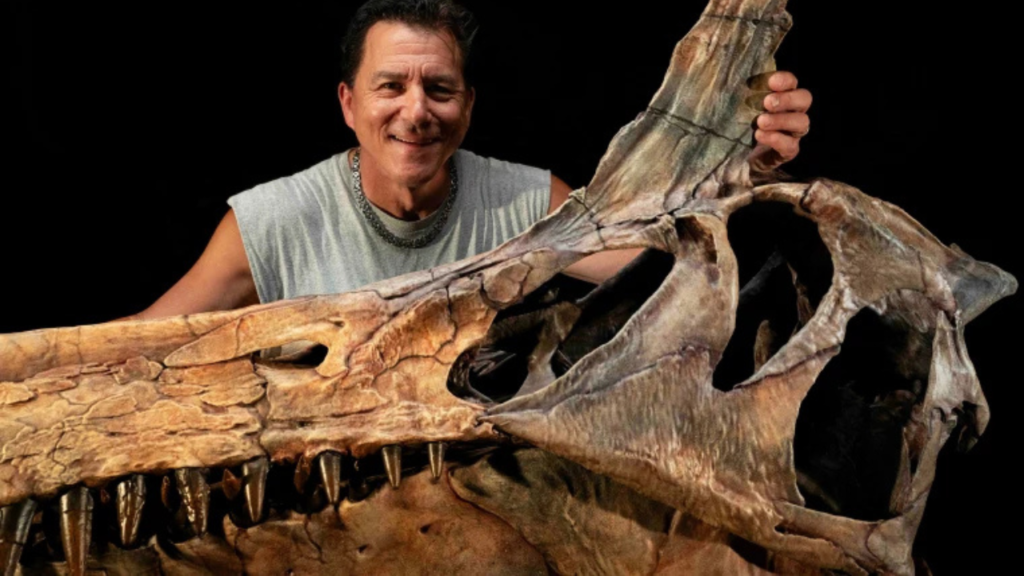
The fact that the fossils were discovered so far inland, according to Sereno, was the “smoking gun,” indicating that the species lived and hunted near river systems and other shallow waterways rather than the sea. He claimed that it would be as improbable as “finding a blue whale in Chicago” to find a massive, marine-adapted predator in the heart of the continent. Spinosaurus mirabilis featured a bony crest on its head, just as Spinosaurus aegyptiacus, but it was more noticeable and dramatic than that of its cousins.
In an email, paleontologist Steve Brusatte of the University of Edinburgh described it as a “flamboyant crest of bone jutting off of its head, like the quiff hairstyle of Elvis.” He did not participate in the research. Sereno described the creature’s head crest as “a very bad weapon.” He continued, “It’s asymmetrical, awkwardly positioned, and somewhat fragile—all characteristics that point away from its use in combat and toward display and signaling, possibly even sexual signaling.”
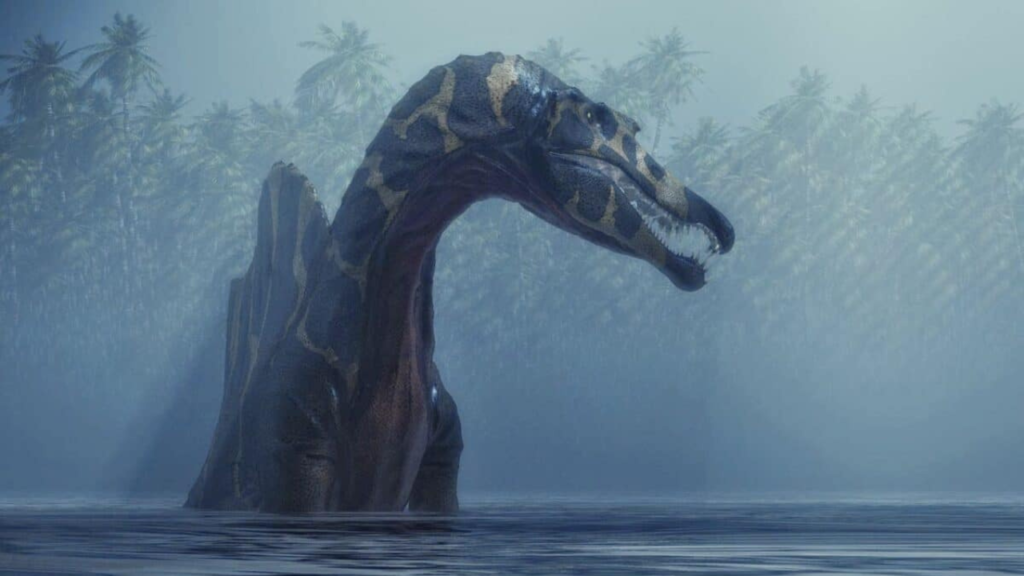
It was a distinct species within the Spinosaurus genus
Researchers were able to confirm that the newly discovered fossils belonged to a different species within the Spinosaurus genus because of the differences between their head crests and those of other Spinosaurus specimens. In contrast to Spinosaurus aegyptiacus, Spinosaurus mirabilis has interlocking teeth and a lower-set mouth, which Sereno claimed was ideal for grasping slick fish.
Additionally, the study clarifies the possible three stages of Spinosaurus’ evolution. Its fish-snaring skull first appeared during the Jurassic; it rose to prominence as a predator in the Early Cretaceous near the ancient Tethys Sea; and, as the Atlantic Ocean opened up just before the Late Cretaceous, it reached its maximum size and developed into a shallow-water ambush specialist in South America and North Africa. “The true Spinosaurus is gradually coming into focus with each new fossil discovery, but it has long been a mysterious dinosaur,” stated Brusatte.
Sereno emphasized how modern tools accelerated the research
Researchers were able to digitally edit the crest and jaw fragments and start reconstructing the skull thanks to the team’s hundreds of images and 3D models of S. mirabilis. According to Matteo Fabbri, an assistant professor at the Center for Functional Anatomy and Evolution at John Hopkins University School of Medicine, the new fossil discovery signifies a “renaissance” in the study of large predatory dinosaurs. Fabbri did not participate in the study.
However, he also pointed out that establishing a new species from ancient fragments is challenging. He claimed that because the fossils are incomplete, there is “much to work with, leaving many doubts regarding the actual anatomy of the animal.” Children can see a facsimile of the Spinosaurus skull at the Children’s Museum in Chicago. In addition to being a significant scientific finding, Sereno sees the fossils as an invitation for the next generation to experience the wonder of discovery.